

What an Engineered Framing Package Solves
A framing bid looks competitive until the job starts absorbing decisions it should never have carried into the field. That is where an engineered framing package changes the outcome. Instead of buying raw steel and leaving coordination to happen under schedule pressure, project teams receive a resolved system designed, engineered, detailed, and prepared for installation before material reaches the site.
For commercial builders, that difference is not academic. It shows up in fewer RFIs, less trade interference, tighter schedule control, and better labor efficiency. When framing is treated as a coordinated building system instead of a commodity material order, a large share of downstream friction can be removed before crews mobilize.
What an engineered framing package actually includes
The term gets used loosely, which creates confusion. In some cases, suppliers use it to describe stamped calculations attached to a steel takeoff. That is not the same thing as a true engineered framing package.
A complete package starts earlier and carries further. It typically includes design-assist input, constructability review, digital coordination, stamped structural engineering, shop-level detailing, and panel or truss fabrication prepared around the realities of installation. The goal is not simply to prove the framing works structurally. The goal is to make sure the framing can be built efficiently within the actual conditions of the project.
That distinction matters. Structural adequacy alone does not prevent field conflict. A wall can work on paper and still collide with MEP routing, miss attachment conditions, complicate sequencing, or require last-minute redesign when dimensions tighten up in the field. A complete package addresses those issues upstream.
For owners and contractors, the real purchase is control. You are not buying steel. You are buying fewer unknowns.
Why traditional framing procurement creates avoidable risk
On many projects, framing is still procured in pieces. One party provides design intent. Another prices material. Engineering may happen later. Shop drawings are developed under time pressure. Field crews then absorb unresolved conditions through workarounds, calls, and change events.
That fragmented approach pushes coordination to the least efficient stage of the job. By the time conflicts surface, labor is active, other trades are moving, and schedule float is limited or gone. Every unresolved opening, backing condition, load path question, or tolerance issue becomes more expensive because it is discovered late.
This is one reason framing packages that appear less expensive at bid time often cost more in execution. The low number may exclude the real effort required to coordinate the system to the building. Someone still pays for that effort. If it happens in the field, it usually costs more and takes longer.
An engineered framing package shifts that workload upstream, where changes are faster, cheaper, and less disruptive. That does not eliminate every issue. No preconstruction process catches everything. But it changes the ratio. More decisions are made when they should be made, before delivery, before install, and before schedule pressure turns manageable questions into project problems.
The business case for an engineered framing package
Commercial decision-makers rarely need convincing that coordination matters. The harder question is whether it materially changes project performance. In framing, it usually does.
The first gain is labor predictability. When wall panels, trusses, and components arrive tied to coordinated production documents, field crews spend less time interpreting intent and more time installing. That matters in a labor market where experienced installers are hard to secure and even harder to keep productive when documentation is incomplete.
The second gain is schedule protection. Framing sits at the center of multiple handoffs. If it slips, follow-on work compresses or stalls. A coordinated package reduces the number of jobsite pauses caused by missing information, conflicting layouts, and revision-driven rework. It does not make the schedule easy. It makes the schedule more manageable.
The third gain is cleaner trade coordination. Framing touches structure, envelope, interiors, and MEP systems. When those interfaces are digitally reviewed before fabrication, conflicts can be resolved in the model or drawing set instead of during installation. That is a much better place to spend problem-solving effort.
There is also a waste reduction component that often gets overlooked. Field cutting, patching, replacement orders, and improvised fixes all consume money. So does over-ordering material to protect against uncertainty. A more resolved framing package lowers that exposure because the system has already been coordinated to a higher level before production begins.
Where engineered framing packages deliver the most value
Not every project needs the same level of preconstruction support. A simple, low-risk building with minimal complexity may not benefit from a heavily coordinated approach to the same degree as a dense multifamily or hospitality project. This is where it depends.
The strongest returns usually show up on projects with repeated unit types, compressed schedules, stacked MEP distribution, mixed framing conditions, or limited room for field interpretation. Multifamily, student housing, senior living, hospitality, and workforce housing are common examples because they combine repetition with complexity. Repetition rewards systemization. Complexity punishes late decisions.
Projects with remote locations or constrained labor markets also benefit. If installation labor is difficult to source, it becomes even more valuable to send a package that reduces field fabrication and decision-making. Factory-built, install-ready components help stabilize performance when labor conditions are less forgiving.
Developers and owners should also pay attention when budget certainty is under pressure. An engineered package does not guarantee no changes. It does reduce the chance that framing becomes a source of recurring cost leakage through avoidable coordination failures.
What to ask before you buy an engineered framing package
The phrase sounds comprehensive, but the scope behind it can vary widely. That is why procurement teams should test what is really being offered.
Start with coordination depth. Ask whether the provider is reviewing constructability and trade interfaces or simply producing engineering from the base plans. There is a major difference between checking structural sufficiency and resolving installation conditions.
Then look at workflow continuity. If design assist, engineering, detailing, manufacturing, and delivery are split across unrelated parties, handoff risk rises. Information can be lost or diluted between stages. A more integrated workflow usually produces cleaner execution because the same coordinated intent carries from review through production.
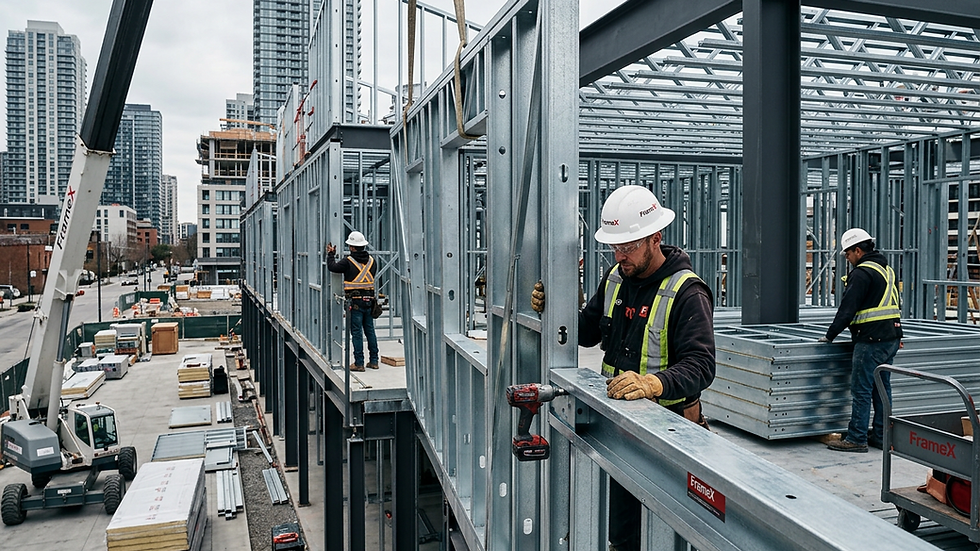
You should also ask how the package arrives at the site. Are components labeled and sequenced for installation? Are wall panels and trusses built to support the field plan, or is the field still expected to sort and adapt material? Installation-ready means more than fabricated. It means prepared for how the job will actually be built.
Finally, ask how early the provider gets involved. The biggest value often appears before final production, when constructability concerns can still shape the framing strategy. If the provider enters too late, some of the avoidable friction is already baked into the job.
The shift from material supply to project execution
This is the core change many teams are making. They are no longer looking at framing as a purchase of studs and track. They are evaluating it as an execution package with direct impact on schedule, labor, and risk.
That mindset changes procurement decisions. It places more value on preconstruction collaboration, digital coordination, and manufacturing discipline. It also reframes cost discussions. A package that is more resolved upfront may not be the cheapest line item in a bid tab, but it can be the better project decision if it removes enough uncertainty from the field.
That is the logic behind a complete system approach used by providers such as Frame X Systems. The point is not to sell more engineering for its own sake. The point is to solve framing before it hits the jobsite, when solving it is still efficient.
An engineered framing package works best when the team wants fewer surprises, not just lower material pricing. If your project is vulnerable to labor shortages, coordination failures, or schedule compression, the smartest framing decision may be the one that reduces field decisions before the first delivery arrives. That is where better outcomes usually start.


Comments