
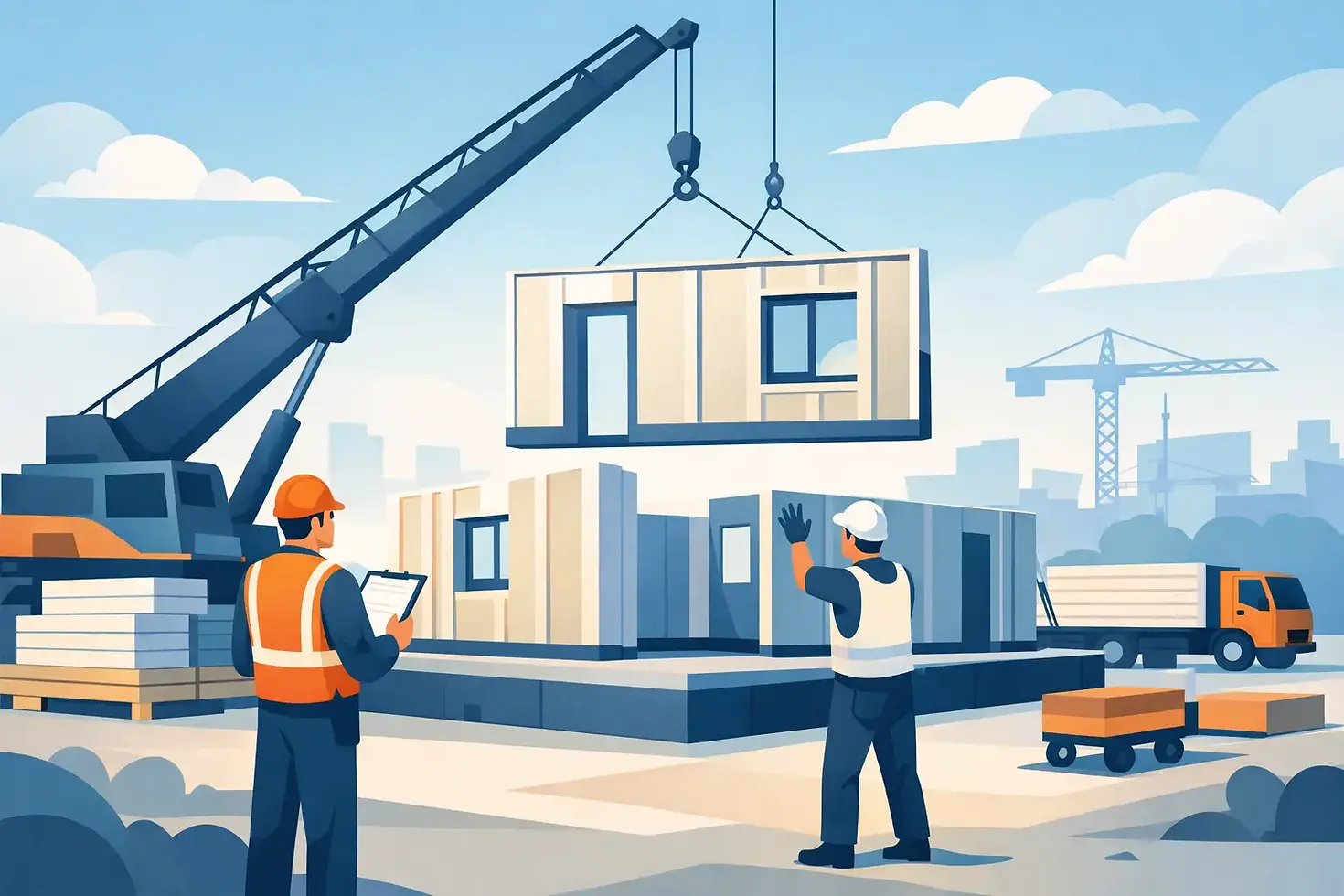
Are Panelized Walls Faster to Install on Site?
A framing crew should not be solving layout conflicts, interpreting incomplete details, and sorting bundles of loose steel while the project schedule is already moving. That is the real question behind, “are panelized walls faster to install?” The answer is generally yes, but only when the panels arrive as part of a fully resolved framing system. Factory-built walls can accelerate field installation. Coordinated engineering, accurate manufacturing, delivery sequencing, and site readiness are what turn that potential into schedule control.
For commercial teams facing labor pressure and compressed milestones, panelization is not simply a different way to package steel. It changes where work happens. Labor and decisions move from an exposed, variable jobsite into a controlled preconstruction and manufacturing process. The field team receives components built to an approved plan, organized for the installation sequence, and ready to set.
Are Panelized Walls Faster to Install? Yes, When the System Is Resolved
A panelized wall system can be installed significantly faster than stick-built cold-formed steel framing because the repetitive cutting, measuring, fastening, and layout work has already been completed. Rather than building a wall one stud at a time, a crew places larger assemblies that are fabricated to the engineered design.
That distinction matters. A wall panel is not automatically a faster wall. If dimensions are wrong, openings are uncoordinated, connections are unclear, or panels arrive out of sequence, the jobsite inherits the same uncertainty it would face with loose materials. The panel may be factory-built, but the schedule advantage disappears when crews must modify it in the field.
A complete panelized framing approach addresses the variables before production begins. Architectural intent is reviewed for constructability. Structural requirements are engineered. Building information is coordinated against other systems. Openings, headers, tracks, connections, and tolerances are addressed in the package rather than debated on the floor deck.
The result is faster installation because fewer decisions remain in the field.
Where Panelized Installation Saves Time
The biggest schedule gains usually come from reduced field labor and reduced interruption. Both matter, but interruption is often the more expensive problem. A crew can work efficiently only when it has accurate information, the right components, and a clear installation sequence.
Less Piece-by-Piece Assembly
Traditional stick framing requires a crew to receive raw material, stage it, measure tracks, cut studs, frame openings, build headers, install bracing, and continuously verify dimensions. Experienced crews can perform this work well, but production depends heavily on available labor, site conditions, and the quality of the documents in hand.
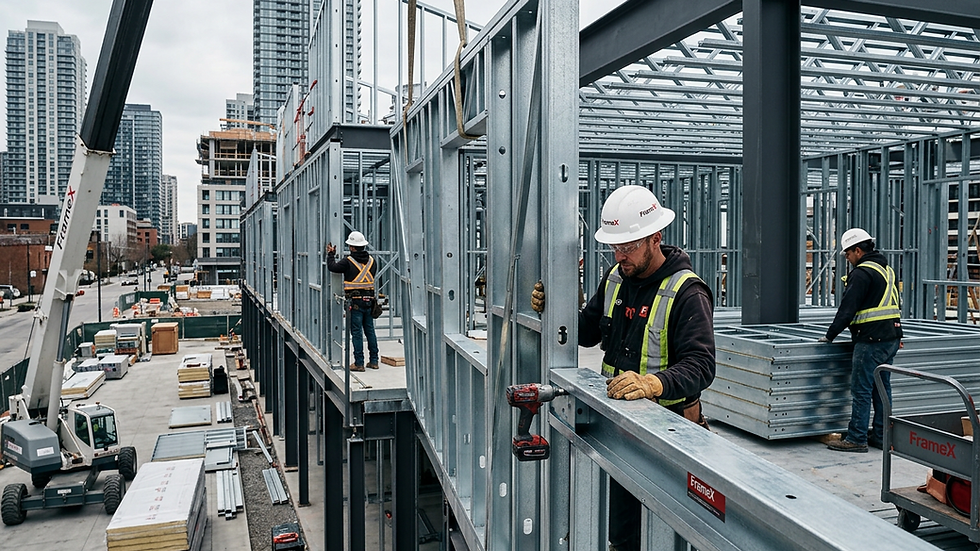
Panelized walls consolidate much of that assembly into manufacturing. Studs, tracks, headers, jambs, and openings are built into predefined wall sections. Field crews focus on unloading, setting, aligning, fastening, and connecting panels. That is a more repeatable installation process, particularly on multifamily, hospitality, student housing, senior living, and other projects with recurring room types and floor plans.
Faster Progress Across Repetitive Floor Plates
Repetition favors panelization. When a building has similar unit layouts across multiple floors, the engineering and manufacturing effort invested early can produce consistent assemblies at scale. Crews become familiar with the setting sequence. Installation methods improve as the project progresses. The package can be delivered in planned releases that support the construction schedule instead of filling the site with material that will not be used for weeks.
This is where panelization can help a general contractor protect critical path activities. Earlier framing completion can create more reliable access for MEP rough-in, sheathing, exterior enclosure, and interior finishes. The benefit is not merely that framing goes up quickly. It is that downstream trades receive a better-defined, more predictable work area.
Fewer RFIs and Field Modifications
An RFI can consume days even when the answer appears simple. A conflict at a rated wall, structural opening, shaft condition, or truss bearing point can stop a crew while multiple parties review responsibility and propose a solution. In a conventional procurement model, many of these issues surface after materials have arrived and framing has begun.
Panelized systems create an opportunity to identify those conditions upstream. Design assist, constructability review, structural engineering, and BIM coordination bring conflicts forward, when changes are less disruptive and less costly. The value is not just fewer RFIs. It is fewer moments where a superintendent must choose between waiting for direction or proceeding at risk.
More Productive Use of Skilled Labor
Skilled framing labor remains difficult to secure in many markets. Panelization helps contractors use that labor where it provides the most value: layout verification, panel setting, alignment, connections, quality control, and coordination with adjacent work.
It does not eliminate the need for a qualified field crew. Panels still require proper handling, temporary bracing, accurate placement, and connection to the structure. But it reduces the amount of repetitive fabrication work that must be completed under changing jobsite conditions. That can make labor planning more predictable and lower exposure to productivity swings.
What Can Slow a Panelized Wall Installation?
Panelization is not a shortcut around poor project controls. It is a system that depends on them. The fastest wall package can still lose time when the jobsite is not ready to receive and set it.
Site logistics are a common constraint. Panels need a defined unloading area, appropriate lifting equipment, safe access, and a staging plan that supports the installation sequence. Delivering panels too early can create congestion and damage risk. Delivering them too late can leave crews waiting. The delivery plan must align with floor readiness, crane or forklift availability, and the actual pace of installation.
Design changes also matter. Late architectural revisions, uncoordinated MEP penetrations, or structural changes after engineering can affect panels already scheduled for production. This does not mean panelization is inflexible. It means the team needs a disciplined change-management process. Decisions made early protect fabrication dates, delivery commitments, and field momentum.
Complex geometry can reduce the advantage as well. Highly irregular elevations, one-off wall conditions, frequent offsets, and limited access may still be good candidates for panelization, but the production and handling strategy requires more attention. The correct question is not whether every wall should be panelized. It is where panelization produces the greatest schedule and risk-control return.
How to Measure the Real Schedule Benefit
Do not evaluate panelization by comparing only the number of days needed to stand walls. Compare the full framing workflow, from design release through downstream trade access.
A meaningful schedule review should account for preconstruction duration, engineering lead time, fabrication capacity, delivery phasing, field installation rates, crew size, equipment needs, and expected rework. It should also consider the cost of uncertainty: RFIs, remobilization, trade stacking, material handling, weather exposure, and lost time caused by incomplete information.
The strongest panelized projects start with early engagement. When the framing partner is brought in while details can still be resolved, the team can evaluate constructability before the project is committed to a field-intensive approach. That gives owners and general contractors a clearer basis for choosing the system, setting milestones, and managing procurement risk.
Frame X Systems approaches panelization as an execution strategy, not a material order. The objective is to deliver digitally coordinated, engineered wall and truss panels that allow the field team to install a defined system rather than assemble a solution under schedule pressure.
The Installation Advantage Is Built Before the First Panel Arrives
Panelized walls are faster to install when the work is solved before it reaches the jobsite. Engineering must match the design. Manufacturing must match the engineered package. Deliveries must match the installation sequence. And the field team must have the access, equipment, and information required to keep setting panels without interruption.
For project teams managing schedule compression, that is the central value proposition. A coordinated panel package does more than reduce framing time. It reduces the number of field decisions that can put the entire project behind.


Comments